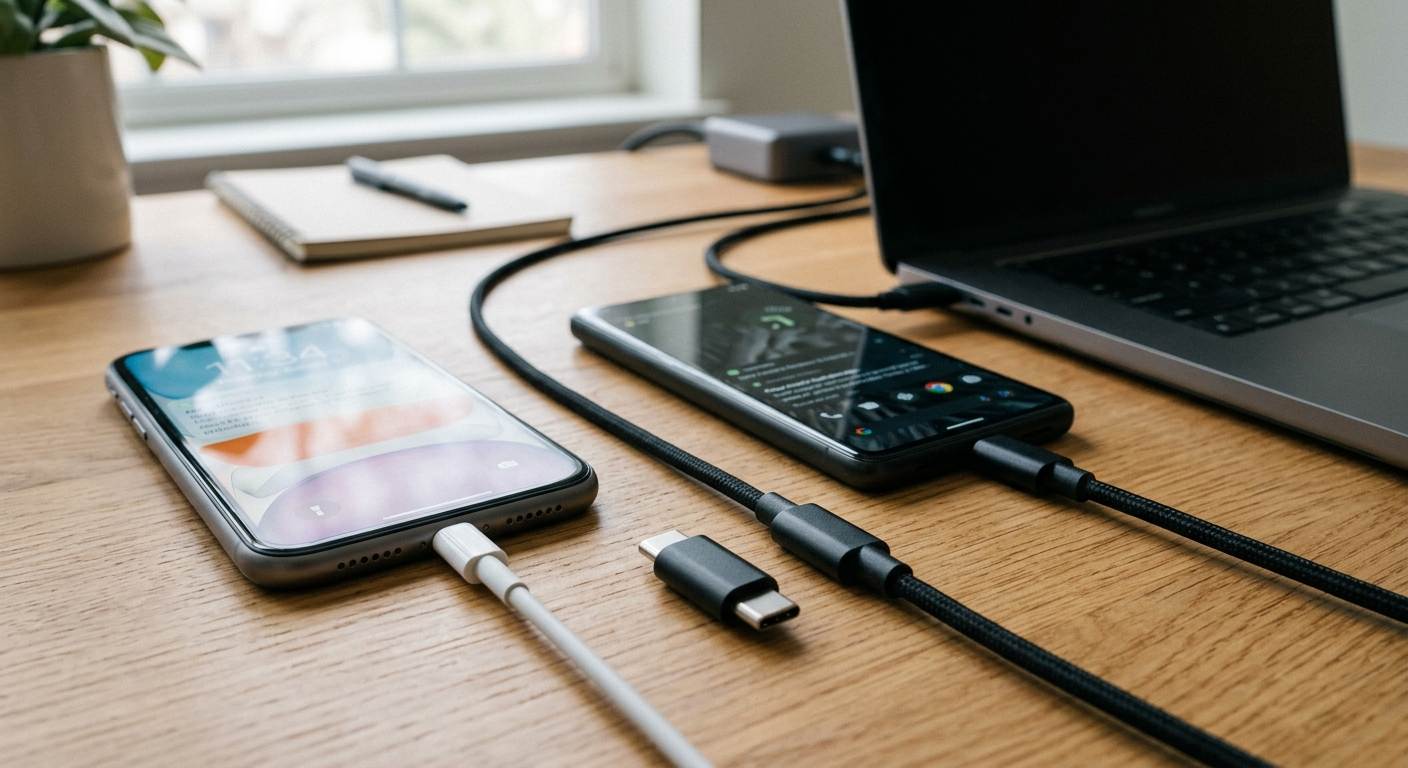
Lightning cable and USB Type-C are the two names that are prevalent in the discussion when it comes to charging cables and data transfer. Chances are you have encountered either (or both) of these connectors in the course of working with an iPhone or a current-day Android device.
The Lightning cable vs USB Type-C controversy is even more topical nowadays, particularly with the technological changes and the transition to global standards. You are buying a new phone, getting the accessories, or just want to be familiar; knowing the differences can help you make more intelligent choices.
What Is a Lightning Cable?
Lightning cable is a connector that is produced by Apple Inc. It was implemented in 2012 when the new iPhone 5 was launched, which substituted its predecessor, the 30-pin connector.
The main products that utilise Lightning cables are the charging and transfer of data on Apple phones like iPhones, iPads (older models), and accessories like AirPods.
It has some of the greatest designs, one of them being its reversible design, as you can always be plugged on either side without having to consider the way it is turned.
What Is USB Type-C?
USB Type-C (also USB-C) is an international connector standard that was created by the USB Implementers Forum. It is now the standard used in most of the modern devices. Android smartphones, laptops, tablets, gaming consoles, and even newer Apple devices will have USB-C ports. USB-C, similar to Lightning, is reversible, yet way more than that, with regard to performance and versatility.
Critical Comparisons of Lightning Cable and USB Type-C.
1. Compatibility
Apple devices are restricted to Lightning cords. A Lightning cable will be required if you own a Lightning cable or some Apple accessories.
USB Type-C product, in turn, is generally supported by various brands and platforms. USB-C is ubiquitous in Android phones, as well as laptops and even certain gaming devices.
This enables USB-C to be much more versatile in real-life applications.
2. Data Transfer Speed
USB Type-C speed is one of its greatest benefits. USB-C is compatible with such modern standards as USB 3.2 and USB4 and can be used to transfer data very fast, up to 40 Gbps in certain applications.
In comparison, however, lightning cables are usually USB 2.0 (approximately 480 Mbps), which seems slow.
USB-C is obviously the better one in case of frequent transfers of large files.
3. Charging Speed
USB Type-C is a connector that is compatible with fast charging technologies including Power Delivery (PD), which allows charging phones, tablets, and even laptops with higher wattages.
Fast charging is also supported by lightning cables, but typically not by the same amount of power as USB-C. In actual applications, USB-C devices are more likely to charge quicker and effectively.
4. Durability and Design
Both cables are small with reversibility although USB-C connectors are believed to be stronger because they are symmetrical in form and have wider usage.
At times lightning cables wear out faster, especially third-party lightning cables, especially at the connector ends.
5. Ecosystem and Future Trends
The technological industry is headed to a universal standard, and USB Type-C is at the forefront. Even Apple has begun switching to USB-C, particularly following regulatory pressure in places such as Europe.
Indicatively, the recent iPhones, like the iPhone 15, have USB-C and no longer Lightning.
This change is an indication that USB-C is the future of connection.
Pros and Cons
Lightning Cable Pros
Lightning Cable Cons
Which One Should You Choose?
The answer depends on your devices and needs.
If you’re deeply invested in the Apple ecosystem and using older devices, a Lightning cable is still necessary.
However, if you want faster speeds, better performance, and future-proof technology, USB Type-C is the clear winner. As more manufacturers, including Apple, shift toward USB-C, it’s quickly becoming the standard connector for modern electronics.
Final Thoughts
The Lightning cable vs USB Type-C debate is slowly coming to an end. While Lightning served its purpose for over a decade, USB Type-C offers everything users need today: speed, compatibility, and efficiency.
If you’re upgrading your tech or buying new accessories, choosing USB-C is a smarter long-term investment.
Frequently Asked Questions (FAQs)
1. Is USB Type-C faster than Lightning?
Yes, USB Type-C is significantly faster in both data transfer and charging compared to Lightning cables.
2. Why is Apple switching to USB-C?
Apple Inc. is adopting USB-C due to global regulations and the need for a universal charging standard.
3. Can I use a USB-C cable with older iPhones?
No, older iPhones require a Lightning cable unless you use an adapter.