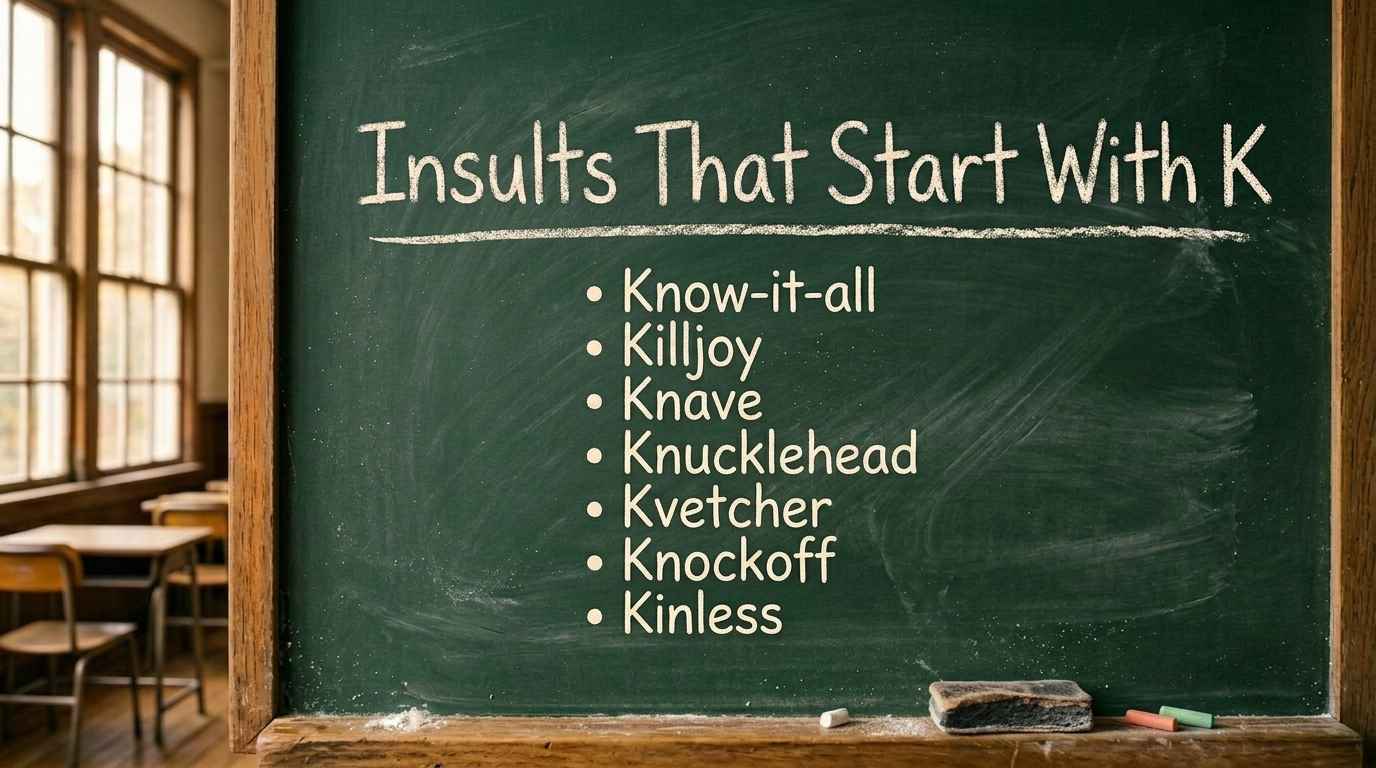
Not every letter of the alphabet gets equal treatment when it comes to insults. Some letters, like S or F, have a vast collection of sharp and colourful words to choose from. The letter K is a little different. It may have fewer options than some letters, but what it lacks in quantity it more than makes up for in quality.
The insults that start with K are some of the most vivid and expressive in the English language. Words like “know-it-all,” “killjoy,” and “knave” have been used for generations to describe people whose behaviour makes life harder or more unpleasant for those around them.
In this article we have put together a comprehensive list of insults that start with K. Whether you are a writer who needs the perfect word for a character, a student expanding your vocabulary, or simply someone curious about the more colourful side of English, this guide has everything you need.
Each word in this list comes with a clear definition and a real-world example sentence so you can see exactly how it is used. By the end you will have a solid understanding of every K insult covered and the kind of person each one describes.
You can check List of Negative Words That Start With K — a broader guide covering all types of negative K words beyond just insults.
Complete 120+ List of Insults That Start With K
Here is our full, carefully researched list of insults beginning with the letter K. Every entry includes a plain-language definition so you know exactly what each word means and who it is typically used to describe.
- Know-it-all — Someone who acts like they are always right about absolutely everything
- Killjoy — A person who ruins fun and brings down the mood wherever they go
- Knave — A dishonest and untrustworthy person who cannot be relied upon at all
- Knockoff — A person who is fake and merely imitates someone more genuine
- Kvetcher — Someone who complains non-stop about absolutely everything around them
- Knucklehead — Someone who consistently makes stupid and careless decisions
- Knee-jerk reactor — A person who overreacts to everything without stopping to think first
- Killjoy critic — Someone who always finds something negative to say about everything
- Knockdown bully — A person who tears others down just to feel better about themselves
- Kowtowing coward — Someone who only agrees with others out of pure fear and weakness
- Keen manipulator — A person who is very skilled at getting others to do what they want
- Kinless — Someone who treats even their closest people with coldness and indifference
- Kleptomaniac — A person with a persistent habit of taking things that do not belong to them
- Knife in the back — Someone who betrays the trust of others in the most hurtful way possible
- Knucklehead fool — A person who makes one careless mistake after another without learning
- Knockabout nuisance — Someone who causes disruption and chaos wherever they happen to go
- Knee-biter — A petty and irritating person who picks fights over completely trivial things
- Know-nothing — Someone who has no useful knowledge yet confidently pretends otherwise
- Killjoy tyrant — A person who uses their authority to crush the joy of everyone around them
- Knavish schemer — Someone who plots dishonestly and selfishly against those who trust them
- Knuckle-dragger — A person who behaves in a primitive and aggressive manner toward others
- Kick-down bully — Someone who only exerts power over those weaker or lower than themselves
- Klutzy fool — A person who is both careless and foolish in everything they do
- Killjoy pessimist — Someone who drains hope and positivity from every situation they enter
- Kooky troublemaker — A person whose erratic behaviour consistently causes problems for others
- Knave-hearted — Someone whose dishonesty runs so deep it defines their entire character
- Know-it-all braggart — A person who combines arrogance with constant boasting about their knowledge
- Knife-tongued — Someone whose words are deliberately sharp and designed to cause pain
- Knocker — A person who constantly criticises and finds fault with everything around them
- Kooky narcissist — Someone whose self-obsession combines with erratic and unpredictable behaviour
- Keen gossip — A person who actively seeks out and spreads private information about others
- Killjoy nag — Someone who combines constant complaining with a refusal to let things go
- Knave and cheat — A person who is both fundamentally dishonest and willing to deceive openly
- Know-nothing fool — Someone who is both ignorant and completely unaware of their own ignorance
- Knee-jerk critic — A person who immediately finds fault without taking time to think first
- Knockdown critic — Someone whose criticism is designed to destroy rather than to improve
- Killjoy bore — A person who is both dull and impossible to be around for long periods
- Knavish liar — Someone who combines natural dishonesty with a talent for deliberate deception
- Kicked-up bully — A person who uses status or position to intimidate and dominate others
- Killjoy complainer — Someone who ruins every situation by finding something to complain about
- Keen backstabber — A person who is enthusiastic and deliberate in their betrayal of others
- Knave without shame — Someone who acts dishonestly and feels absolutely no guilt about it
- Knockoff friend — A person who pretends to be a genuine friend while having selfish motives
- Know-all pest — Someone who combines arrogance with a constant need to correct everyone
- Killjoy control freak — A person who ruins fun by insisting on controlling every situation
- Knife-twister — Someone who deliberately makes painful situations worse for those around them
- Knocker and moaner — A person who combines fault-finding with endless and pointless complaining
- Knavish opportunist — Someone who uses dishonest means to take advantage of every opportunity
- Keen fault-finder — A person who actively seeks out flaws and errors in everything others do
- Knave at heart — Someone whose dishonesty is a fundamental and unchangeable part of who they are
- Klutz — A person who is clumsy and constantly causes problems through their carelessness
- Killjoy grouch — Someone who is both deeply negative and permanently bad-tempered
- Know-nothing blowhard — A person who speaks loudly and confidently about things they know nothing about
- Knife-wielding gossip — Someone who uses information about others as a weapon to cause harm
- Knockabout fool — A person whose foolishness makes them a constant source of trouble and chaos
- Keen underminer — Someone who quietly and deliberately chips away at the confidence of others
- Killjoy dictator — A person who uses control and authority to eliminate any spontaneity or fun
- Knavish fraud — Someone who combines dishonesty with deliberate and calculated deception
- Knuckle-brained — A person who is so slow to think that reasoning with them is impossible
- Kowtower — Someone who submits to others in a shameful and spineless way to avoid conflict
- Keen stirrer — A person who deliberately creates drama and conflict between people around them
- Killjoy whiner — Someone who combines constant negativity with persistent and irritating complaining
- Knave of hearts — A person who uses charm and emotional manipulation to deceive those around them
- Know-it-all windbag — Someone who talks endlessly about things they only partially understand
- Knockdown mocker — A person who uses mockery specifically to humiliate and bring others down
- Keen schemer — Someone who is always planning and plotting to get ahead at others expense
- Killjoy meddler — A person who ruins situations by interfering in things that are not their concern
- Knavish trickster — Someone who uses clever tricks and deception to manipulate those around them
- Knuckle-headed oaf — A person who is both physically clumsy and stubbornly resistant to reason
- Kowtowing yes-man — Someone who agrees with everything their superiors say out of weakness and fear
- Keen troublemaker — A person who actively seeks out opportunities to cause conflict and disruption
- Killjoy sourpuss — Someone whose permanent sour expression and attitude drains joy from any room
- Knave and rogue — A person who combines dishonesty with a general disregard for rules and others
- Know-nothing critic — Someone who criticises freely despite having no real knowledge of the subject
- Knockabout pest — A person whose disruptive and chaotic behaviour makes them a constant nuisance
- Keen nitpicker — Someone who obsessively finds tiny faults in everything and refuses to let them go
- Killjoy naysayer — A person who automatically says no to every idea and possibility presented to them
- Knavish deceiver — Someone who uses deliberate and planned deception to mislead those around them
- Knucklehead blunderer — A person who makes one avoidable mistake after another without any self-awareness
- Kowtowing flatterer — Someone who gives excessive and insincere compliments to win favour and avoid conflict
- Keen saboteur — A person who deliberately undermines the efforts and work of others around them
- Killjoy scold — Someone who constantly lectures and reprimands others for having fun or relaxing
- Know-nothing loudmouth — A person who speaks loudly and at length on topics they do not understand
- Knockdown detractor — Someone who is dedicated to criticising and diminishing the achievements of others
- Keen rumour-spreader — A person who actively seeks out and circulates unverified information about others
- Killjoy doom-monger — Someone who always predicts the worst outcome and spreads fear and negativity
- Knavish manipulator — A person who uses dishonest psychological tactics to control those around them
- Knuckle-brained fool — Someone who combines slow thinking with a pattern of foolish and avoidable mistakes
- Kowtowing crawler — A person who demeans themselves by flattering and submitting to those with power
- Keen pot-stirrer — Someone who deliberately introduces conflict and drama into peaceful situations
- Killjoy stick-in-the-mud — A person who refuses to try anything new or allow others to enjoy themselves
- Knave through and through — Someone whose dishonesty is total and present in every aspect of who they are
- Know-nothing windbag — A person who fills conversations with confident-sounding ignorance and empty words
- Knockabout annoyance — Someone whose disruptive behaviour makes them a persistent source of irritation
- Keen fault-seeker — A person who goes out of their way to find and point out the flaws of others
- Killjoy party-pooper — Someone who ruins celebrations and fun occasions by being negative or difficult
- Knavish plotter — A person who constantly schemes and plans against the interests of those around them
- Knucklehead repeater — Someone who makes the same avoidable mistakes again and again without learning
- Kowtowing pushover — A person who cannot say no and allows themselves to be used by stronger personalities
- Keen mischief-maker — Someone who takes pleasure in creating small acts of disruption and disorder
- Killjoy rain-on-parade — A person who always finds a way to spoil the happiness or success of others
- Knavish exploiter — Someone who uses dishonest means to take advantage of the trust or vulnerability of others
- Knuckle-brained blunderer — A person whose combination of slow thinking and carelessness leads to constant mistakes
- Kowtowing doormat — Someone who allows themselves to be completely walked over by those around them
- Keen antagonist — A person who actively seeks out conflict and opposition in every situation
- Killjoy wet blanket — Someone who dampens enthusiasm and excitement wherever they go
- Knavish sneak — A person who operates dishonestly and in secret to achieve their selfish goals
- Knucklehead mistake-maker — Someone whose pattern of avoidable errors makes them unreliable and frustrating
- Kowtowing weakling — A person whose lack of backbone means they never stand up for themselves or others
- Keen grudge-holder — Someone who clings to resentment long after the original cause has passed
- Killjoy over-thinker — A person who ruins spontaneous moments by over-analysing and worrying too much
- Knavish con artist — Someone who uses charm and deliberate deception to trick and exploit others
- Know-nothing pretender — A person who pretends to have knowledge or skills they clearly do not possess
- Knockdown joy-killer — Someone whose presence consistently destroys the happiness of those around them
- Keen drama-starter — A person who initiates conflict and emotional chaos wherever they go
- Killjoy pessimist bore — Someone who is simultaneously negative, dull, and impossible to enjoy being around
- Knavish double-crosser — A person who betrays those who trusted them in a calculated and deliberate way
- Knuckle-brained oaf — Someone who combines physical clumsiness with a complete inability to think clearly
- Kowtowing yes-sayer — A person who agrees with everything to avoid conflict regardless of their actual opinion
- Keen attention-seeker — Someone who constantly draws attention to themselves in disruptive and exhausting ways
- Killjoy mood-killer — A person whose arrival consistently lowers the energy and happiness of any group
- Knavish self-server — Someone who acts with complete disregard for others and thinks only of themselves
- Know-nothing show-off — A person who boasts and shows off despite having nothing of real value to offer
- Knockdown confidence-crusher — Someone who deliberately destroys the self-belief of those around them
- Keen provocateur — A person who deliberately says and does things designed to provoke a reaction
- Killjoy energy-drainer — Someone whose negativity and neediness exhausts everyone around them
- Knavish social climber — A person who uses dishonest and manipulative means to advance their social status
- Knucklehead repeat offender — Someone who continues to make the same mistakes despite repeated warnings
- Kowtowing sycophant — A person who uses excessive flattery and agreement to win favour from those above them
- Keen manipulative liar — Someone who combines natural dishonesty with a talent for psychological manipulation
- Killjoy negativity-spreader — A person who infects every situation and conversation with their relentless pessimism
- Knavish power-grabber — Someone who uses dishonest tactics to seize control and authority over others
- Know-nothing egotist — A person who is both completely ignorant and completely convinced of their own importance
- Knockdown spirit-crusher — Someone who makes it their mission to destroy the enthusiasm and hope of others
- Keen gossipmonger — A person who lives for collecting and spreading private information about others
- Killjoy thought-police — Someone who tries to control what others think, say, or feel at all times
- Knavish rule-bender — A person who twists rules and agreements dishonestly to suit their own purposes
- Knucklehead bumbler — Someone who stumbles through life causing chaos through sheer carelessness and stupidity
- Kowtowing approval-seeker — A person who cannot function without constant validation from those around them
- Keen habitual liar — Someone for whom lying has become such a habit they do it even when unnecessary
- Killjoy fun-wrecker — A person who actively and consistently destroys enjoyment wherever they find it
- Knave and rogue combined — Someone who is both fundamentally dishonest and completely without moral principles
- Know-nothing loudmouth fool — A person who is ignorant, loud, and completely unaware of how little they know
- Knockdown bully and coward — Someone who acts aggressively toward others but retreats when faced with real challenge
Mild vs Strong Insults Starting With K
Just like any category of insults, K words range from relatively mild and playful to quite serious and cutting. Here is how they break down:
Mild K insults (everyday use)
- Know-it-all — critical but not deeply offensive, most people understand it immediately
- Killjoy — clearly critical but has a light almost comedic quality to it
- Kvetcher — the Yiddish origin gives it a warm almost affectionate sting
- Knucklehead — sounds funny even as it criticises, rarely causes serious offence
Stronger K insults (use with care)
- Knave — implies deep and deliberate dishonesty, a serious moral accusation
- Knife in the back — describes betrayal at its most hurtful and personal
- Knockdown bully — implies someone who deliberately destroys others confidence
- Knavish schemer — paints a picture of deliberate and calculated malice
Frequently Asked Questions
What is the most popular insult starting with K?
Without question the most widely recognised and commonly used insult starting with K is “know-it-all.” It is one of those words that almost everyone understands immediately regardless of their background or age. It is also one of the most relatable insults in the English language because virtually everyone has met a know-it-all at some point in their life.
What is a good old-fashioned insult starting with K?
“Knave” is the best choice if you want something with historical weight and gravitas. It has been used in English for over a thousand years and carries a strong sense of moral condemnation. If you are writing historical fiction or simply want to call someone dishonest in the most eloquent way possible, knave is your word.
What is a funny insult that starts with K?
“Knucklehead” and “kvetcher” are both excellent choices if you want something that makes a point while still raising a smile. Knucklehead has that satisfying comic sound that takes the edge off the criticism. Kvetcher has a warm Yiddish quality that makes it feel almost affectionate even when it is clearly a complaint.
What is a one-word K insult?
There are several strong single-word K insults to choose from. “Killjoy,” “knave,” “kvetcher,” and “knucklehead” are all single words that carry a complete meaning on their own. Each one immediately tells the listener exactly what kind of person is being described.
Are insults starting with K suitable for creative writing?
Absolutely. K insults offer a wonderful range of tones from the playful and comic to the serious and dramatic. Words like killjoy and knucklehead work well in lighter, more comedic writing, while knave and knavish schemer suit darker, more serious narratives. The variety makes them useful across almost every genre of writing.
Explore More Insult Lists
If you found this article helpful, here are more insult lists from our collection:
- Insults That Start With F — A full list of F insults with meanings and examples
- Insults That Start With M — Coming soon
- Insults That Start With R — Coming soon
- Insults That Start With S — Coming soon