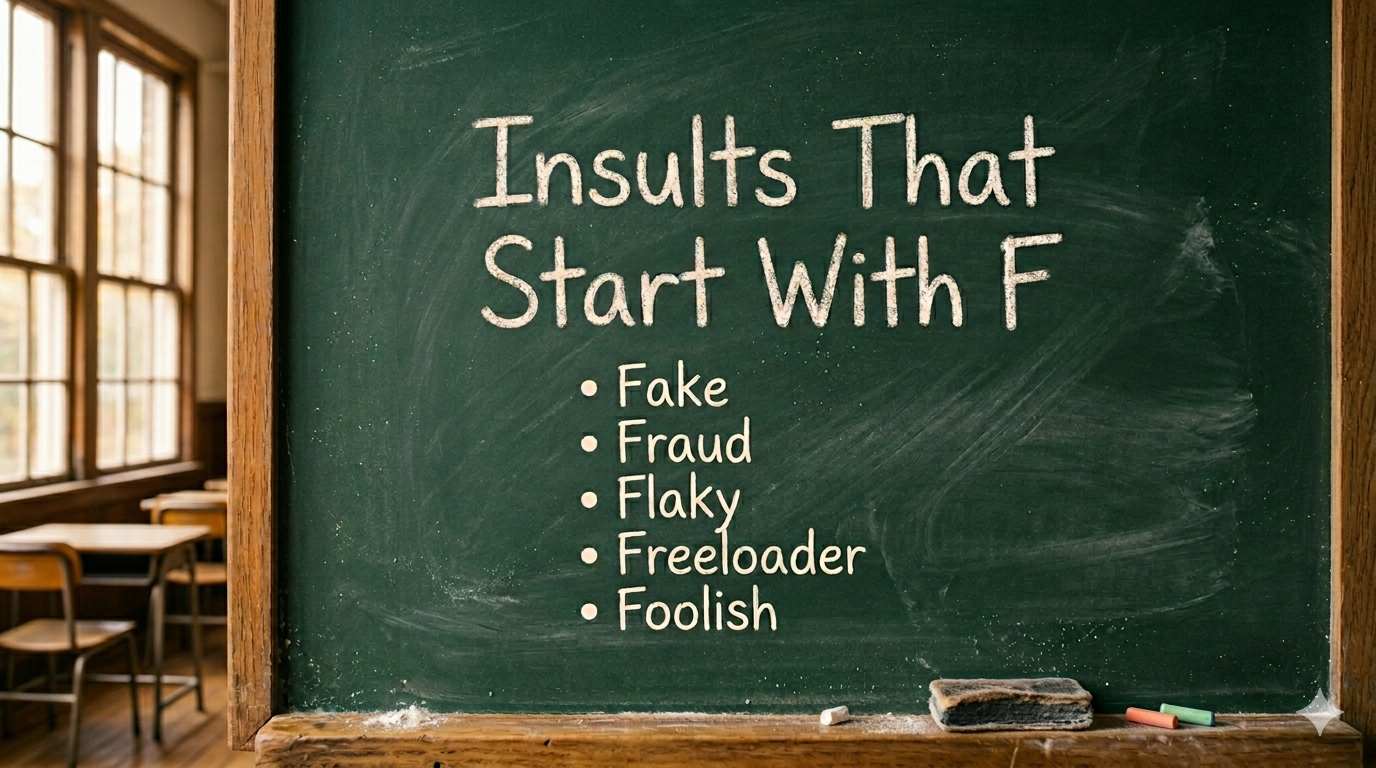
Language is one of the most powerful tools humans have. The words we choose to describe people reveal a great deal about how we see the world and the people in it. Insulting words, in particular, carry a sharp emotional weight that can cut deep when used in conversation, writing, or even just in thought.
The letter F gives us some of the most commonly used insults in the English language. From mild and everyday words like “fake” and “flaky” to stronger expressions like “fraud” and “fiend,” these words paint vivid pictures of unpleasant personality traits and behaviours.
In this article, we have put together a comprehensive list of insults that start with F, complete with clear definitions, example sentences, and explanations of how and when these words are typically used. By the end of this guide, you will have a thorough understanding of each word and the kind of person it describes.
Also Read:
If you are looking for negative words that start with F (not just insults), we have a separate detailed guide covering all types of negative F words. Check it out here: List of Negative Words That Start With F.
Complete 120+ List of Insults That Start With F
Below is our full list of insults beginning with the letter F. Every word comes with a clear, plain-language definition so you can immediately understand what it means and who it typically describes.
- Fake — Someone who pretends to be something they are not in personality or friendship
- Foul — A person with a disgusting, offensive, or deeply unpleasant attitude toward others
- Fraud — Someone who deceives others by pretending to have skills or status they do not have
- Freeloader — A person who takes advantage of others generosity without ever giving anything back
- Foolish — Someone who consistently acts without thinking and makes poor decisions repeatedly
- Fickle — A person who changes their mind constantly and can never be relied upon by others
- Ferocious — Someone with a violent and aggressive personality that frightens those around them
- Flaky — A person who is unreliable and always cancels plans or lets others down at the last minute
- Fiend — Someone with wicked, evil, or deeply unpleasant behaviour and intentions toward others
- Fanatic — A person who takes their views or beliefs to a dangerous and harmful extreme
- Frustrating — Someone who makes even the simplest things unnecessarily complicated for everyone
- Frantic — A person who creates chaos, panic, and disorder wherever they happen to go
- False — Someone who cannot be trusted to be genuine, honest, or sincere in any situation
- Faithless — Someone who is disloyal and breaks the trust of everyone who relies on them
- Flattering liar — A person who gives insincere compliments purely to manipulate those around them
- Foul-mouthed — Someone who uses offensive and inappropriate language constantly and without care
- Foolhardy — A person who takes reckless risks without any thought for the consequences involved
- Fervent hypocrite — Someone who preaches values they openly and repeatedly violate in their own life
- Fuming bully — A person who uses their anger as a weapon to intimidate and control others
- Feisty pest — A person who is aggressively annoying and impossible to ignore or get away from
- False friend — Someone who acts like a friend but is only around when it benefits them personally
- Fault-finder — A person who obsessively looks for and points out flaws in everything around them
- Feckless — Someone who is completely irresponsible and lacks any drive or determination whatsoever
- Ferocious critic — A person who attacks and tears apart the work or ideas of others aggressively
- Flatterer — Someone who gives excessive and insincere praise purely to get something in return
- Flagrant liar — A person who lies openly and shamelessly without any attempt to hide it
- Flimflammer — Someone who uses tricks and deception to swindle or mislead those around them
- Flincher — A person who always backs down and retreats when faced with any difficulty or challenge
- Foam-mouthed ranter — Someone who screams and rants aggressively without any logical point or purpose
- Foe disguised as friend — A person who pretends to be on your side while secretly working against you
- Fool — Someone who acts in a stupid or reckless way and never seems to learn from mistakes
- Footpad — A person who takes advantage of others in a sneaky and cowardly manner
- Forked tongue — Someone who says one thing to your face and something entirely different behind your back
- Foul-tempered — A person with a consistently bad and aggressive temperament that affects everyone nearby
- Fraudster — Someone who systematically deceives others for personal gain with no remorse whatsoever
- Freewheeling liar — A person who lies casually and constantly without any concern for the consequences
- Fretful complainer — Someone who worries constantly and drags everyone around them into their anxiety
- Frostbitten soul — A person who is so cold and indifferent they make everyone around them feel unwelcome
- Frowning grouch — Someone who is permanently grumpy and brings down the mood of every room they enter
- Fudge-maker — A person who constantly twists the truth to make their actions seem more acceptable
- Full of hot air — Someone who talks a great deal but never says anything of any real value or substance
- Fumbling fool — A person who is both clumsy and foolish and constantly makes avoidable mistakes
- Furious bully — Someone who uses explosive anger and aggression to dominate and frighten others
- Fussy nitpicker — A person who obsesses over tiny and insignificant details in an exhausting way
- Fawning sycophant — Someone who gives excessive and embarrassing flattery to those they want to impress
- Fearmongerer — A person who deliberately spreads fear and panic to manipulate those around them
- Feeble excuse-maker — Someone who always has a weak and unconvincing excuse ready for every failure
- Fierce backstabber — A person who betrays those who trusted them in an aggressive and deliberate way
- Filthy gossip — Someone who takes pleasure in spreading dirty and damaging rumours about others
- Finger-pointer — A person who always blames others and never takes any personal responsibility
- Fire-starter — Someone who deliberately creates conflict and drama between people around them
- Fist-shaker — A person who resorts to aggression and threats as their first response to any problem
- Flattery merchant — Someone who deals in insincere compliments as a tool of manipulation and control
- Flea-brained — A person whose thinking is so scattered and small it is essentially useless
- Flighty gossip — Someone who drifts from person to person spreading rumours and stirring up trouble
- Flip-flopper — A person who constantly changes their position on things making them completely unreliable
- Flippant mocker — Someone who dismisses the feelings and concerns of others with casual contempt
- Flirtatious manipulator — A person who uses charm and attraction as a tool to get what they want from others
- Flouter — Someone who openly and deliberately ignores rules, expectations, and the feelings of others
- Fly-by-night — A person who makes promises and commitments they never intend to follow through on
- Foaming agitator — Someone who stirs up strong emotions and conflict in an aggressive and irrational way
- Foe in disguise — A person who pretends to be an ally while secretly undermining everything you do
- Footslogger bully — Someone who uses persistence and grinding pressure to wear down those around them
- Forger — A person who falsifies and fabricates things to deceive others for personal advantage
- Foul schemer — Someone who plans and plots in dishonest and unpleasant ways to serve their own interests
- Fractious troublemaker — A person who is consistently difficult and creates arguments wherever they go
- Fragile egotist — Someone whose enormous ego is completely unable to handle even the mildest criticism
- Frank bully — A person who is openly and unapologetically aggressive and domineering toward others
- Frantic manipulator — Someone who uses chaotic and overwhelming behaviour to control those around them
- Fraudulent charmer — A person who uses charm and likability as a cover for deliberate dishonesty
- Fretful agitator — Someone who is constantly anxious and spreads that anxiety to everyone nearby
- Frivolous complainer — A person who complains about petty and unimportant things in an exhausting way
- Frosty antagonist — Someone who is cold, distant, and hostile in a way that creates ongoing conflict
- Frothing agitator — A person who works themselves and others into a frenzy over exaggerated grievances
- Fruitless critic — Someone who criticises constantly but never offers anything constructive or useful
- Frustrated control freak — A person who becomes aggressive when they cannot control every situation around them
- Fudge-packer — Someone who deliberately obscures the truth to make their dishonest actions look acceptable
- Fuming antagonist — A person whose constant anger makes them aggressive and difficult to be around
- Fuming nitpicker — Someone who combines explosive anger with an obsession over tiny and irrelevant details
- Furtive schemer — A person who plots and plans in secret and never lets others know what they are really up to
- Fussy complainer — Someone who finds fault with absolutely everything and complains about it at length
- Futile braggart — A person who boasts endlessly about achievements that are either exaggerated or imaginary
- Fake altruist — Someone who pretends to care about others purely to make themselves look good to everyone
- Fake apologist — A person who apologises without meaning it and repeats the same behaviour immediately after
- Fake cheerful — Someone who puts on a false smile while being negative and manipulative underneath
- Fake generous — A person who appears giving on the surface but always has a selfish motive behind it
- Fake humble — Someone who pretends to be modest while actually being deeply arrogant and self-important
- Fake listener — A person who pretends to pay attention while actually waiting for their turn to speak
- Fake loyalist — Someone who claims to be loyal while quietly working against the interests of those they claim to support
- Fake moralist — A person who lectures others about ethics and values while ignoring them in their own life
- Fake peacemaker — Someone who pretends to resolve conflict while actually stirring it up behind the scenes
- Fake supporter — A person who claims to be on your side but disappears or works against you when it matters
- Fake sympathiser — Someone who pretends to feel sorry for you while secretly being pleased at your misfortune
- Fake team player — A person who appears cooperative in public while undermining everyone privately
- Fake victim — Someone who constantly portrays themselves as wronged to gain sympathy and avoid responsibility
- Fearful aggressor — A person who uses aggression as a cover for the deep insecurity they feel inside
- Feeble bully — Someone who picks on those weaker than themselves but crumbles when challenged directly
- Feigning friend — A person who performs friendship convincingly while having no genuine care for you at all
- Fervent gossip — Someone who pursues and spreads rumours with real enthusiasm and obvious enjoyment
- Festering grudge-holder — A person who clings to old resentments and lets them poison every new interaction
- Fevered agitator — Someone whose passionate intensity drives them to create conflict and unrest around them
- Fibber — A person who lies habitually about small and large things alike and cannot help themselves
- Fierce underminer — Someone who works with real determination to destroy the confidence and efforts of others
- Filthy schemer — A person whose plans and plots are morally repugnant and designed to harm others
- Fire-and-brimstone bully — Someone who uses moral outrage and extreme language to intimidate and silence others
- Fitful agitator — A person whose erratic behaviour creates ongoing disruption and uncertainty for everyone
- Fixed mindset fool — Someone who refuses to grow or learn and clings stubbornly to outdated and wrong ideas
- Flailing manipulator — A person who uses chaos and drama as tools to keep others off-balance and controllable
- Flame-thrower — Someone who uses incendiary words and actions to destroy relationships and situations
- Flashy fraud — A person who uses impressive appearance and style to cover up their fundamental dishonesty
- Flat-out liar — Someone who lies directly and completely without any attempt at subtlety or nuance
- Flawed egotist — A person whose massive ego is built on a deeply fragile and inaccurate self-image
- Fleeting friend — Someone who is only present during the good times and vanishes the moment things get hard
- Flesh-creeping schemer — A person whose plans and intentions are so unpleasant they make others physically uncomfortable
- Flighty fake — Someone who is both unreliable and fundamentally insincere in everything they say and do
- Flinching coward — A person who backs away from every challenge and leaves others to deal with difficulties alone
- Floating liar — Someone who tells different versions of the same story to different people without any shame
- Floppy commitment-maker — A person who makes promises enthusiastically and then fails to follow through every time
- Floundering bully — Someone who uses aggression to cover for the fact that they are completely out of their depth
- Flustered aggressor — A person who responds to any pressure or criticism with disproportionate anger and aggression
- Fobbing-off merchant — Someone who constantly deflects, makes excuses, and avoids taking any real responsibility
- Foggy thinker — A person whose thinking is so muddled and unclear they cannot make good decisions about anything
- Fond of lies — Someone who is so comfortable with dishonesty that lying feels natural and effortless to them
- Foolish agitator — A person who stirs up conflict and drama without any real understanding of the consequences
- Footprint eraser — Someone who takes credit for the work of others and then erases any evidence of their contribution
- Forceful manipulator — A person who uses pressure and intimidation as their primary tools of control over others
- Foreboding presence — Someone whose arrival reliably signals that things are about to become more difficult and unpleasant
- Forgetter of favours — A person who forgets every kindness done for them the moment they no longer need anything
- Fork-tongued flatterer — Someone who says sweet and kind things to your face while saying the opposite behind your back
- Foul backstabber — A person who betrays others in a particularly nasty and deliberate way without any remorse
- Foul influence — Someone whose presence consistently brings out the worst in those around them
- Fractured personality — A person whose inconsistent and unpredictable behaviour makes them impossible to trust
- Fraudulent helper — Someone who offers assistance with a hidden agenda and always expects something in return
- Freeloading opportunist — A person who takes advantage of every situation to benefit themselves without contributing
- Fretful nuisance — Someone whose constant anxiety and complaining makes them exhausting to spend time around
- Frightful gossip — A person who spreads particularly damaging and hurtful information about those around them
- Frosty manipulator — Someone who uses cold and calculated emotional distance as a tool to control others
- Frustrated agitator — A person who channels their personal frustrations into creating conflict for those around them
- Full-blown narcissist — Someone whose self-obsession is so complete it leaves no room for consideration of others
- Full-on bully — A person who is completely and unapologetically aggressive and domineering in all situations
- Fumbling deceiver — Someone who lies and manipulates but does it so clumsily that it is obvious to everyone
- Fundamental liar — A person for whom dishonesty is so deeply ingrained it is essentially part of their identity
- Furious grudge-holder — Someone who holds onto anger and resentment so tightly it defines everything they do
- Fussy control freak — A person who combines obsessive attention to detail with a need to control every situation
Mild vs Strong Insults Starting With F
Not all insults carry the same weight. Some are mild enough to use in casual conversation without causing serious offence, while others are much stronger and should be used carefully or only in appropriate contexts.
Mild F insults (suitable for everyday use)
- Flaky — describes unreliability without being deeply offensive
- Fickle — points out inconsistency in a relatively light way
- Foolish — a classic word that is critical without being harsh
- Frantic — describes chaotic behaviour without personal attack
Stronger F insults (use with care)
- Fraud — a serious accusation that implies deliberate dishonesty
- Fiend — carries strong connotations of wickedness and evil
- Ferocious — implies a violent and dangerous personality
- Foul — suggests something deeply repulsive about a person
Frequently Asked Questions
1: What is the most popular insult starting with F?
The most commonly used insult starting with F in everyday English is without doubt “fake.” It is used widely across all age groups and cultures to describe someone who is insincere or dishonest. Other frequently used F insults include “fraud,” “flaky,” and “freeloader.”
2: What is a strong insult starting with F?
Among the stronger insults beginning with F, “fraud” and “fiend” stand out. Both carry serious weight. Calling someone a fraud implies calculated and deliberate deception, which is a serious moral accusation. Calling someone a fiend suggests their character is wicked at its core.
3: What is a funny insult that starts with F?
For something a little more lighthearted, “flaky” and “freeloader” tend to get a smile even as they make a point. They are critical without being cruel, which makes them good choices when you want to call someone out in a way that is more funny than hurtful.
Are these insults appropriate to use in conversation?
As with any strong language, context matters enormously. Milder words like flaky or foolish are generally acceptable in casual conversation. Stronger words like fiend or ferocious are better suited to writing or situations where you need to make a serious point. Always consider your audience and the setting before using any insulting language.
What is a one-word F insult?
There are several strong single-word insults that start with F. “Fake,” “fraud,” “fool,” and “fiend” are all single-word options that carry a clear meaning and strong emotional impact. Each one says a lot with very little, which is exactly what makes a good insult in any language.
Explore More Word Lists on List of Information
If you found this article useful, here are some more related word lists you will enjoy:
- Insults That Start With K - 100+ Full List With Meanings & Examples
- Insults That Start With M — Coming soon
- Insults That Start With R — Coming soon
We cover word lists for every letter of the alphabet. Browse our full collection at List of Information for more vocabulary guides, word lists, and language resources.