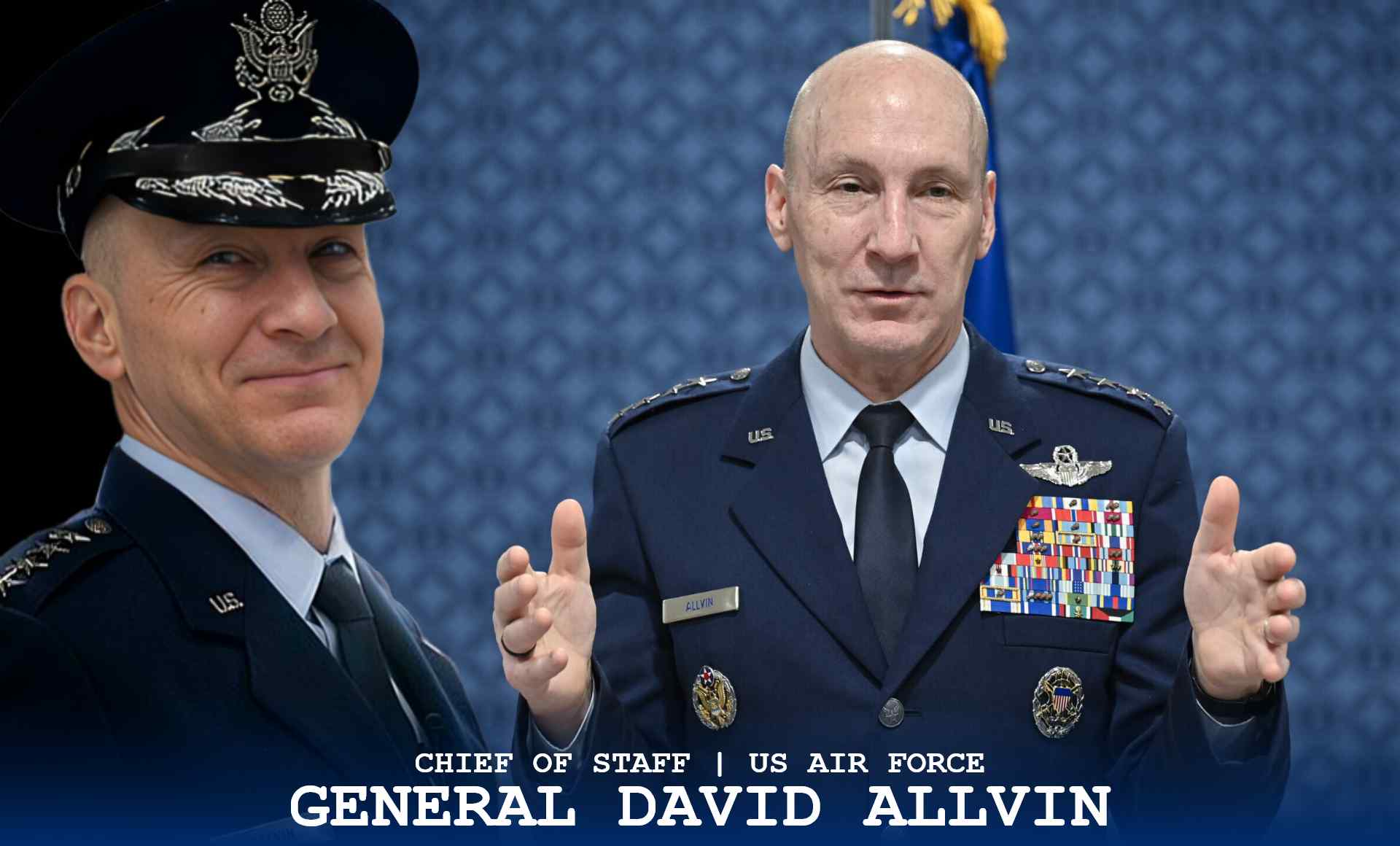
The early retirement of General David W. Allvin, the 23rd Chief of Staff of the United States Air Force, was one of the most surprising leadership changes in 2025. Chiefs of Staff typically serve a four-year term, providing continuity and stable direction for the nation’s air defense strategy. However, General Allvin stepped down after only about two years in the role, creating questions and curiosity throughout defense circles, media, and public discussions.
His retirement marked a pivotal moment for the Air Force, occurring during a period of significant transition across the Pentagon. Understanding the context of his career, contributions, and the impact of his departure provides important insight into how military leadership evolves during times of shifting priorities and geopolitical challenges.
Who Is General David W. Allvin?
General David W. Allvin built an exceptional 39-year career in the United States Air Force, serving in various command and strategic planning roles. Before becoming Chief of Staff, he served as the Vice Chief of Staff, where he was deeply involved in high-level planning, modernization efforts, and organizational reform.
As a command pilot, Allvin accumulated thousands of flight hours and held several leadership positions related to operations, training, and policy development.
His vast experience made him a respected figure within the Air Force community, known for his analytical approach, calm leadership style, and commitment to preparing the service for future conflicts. When he took office as Chief of Staff in November 2023, expectations were high for four years focused on modernization, readiness, and strategic restructuring.
The Announcement of His Early Retirement
The announcement of General Allvin’s retirement came in August 2025 when the Air Force confirmed that he would step down “on or about November 1, 2025.” This timeline meant he would leave office after roughly two years, a significant deviation from the standard four-year tenure traditionally held by Chiefs of Staff. The announcement emphasized his decades of service and dedication but did not disclose any specific reason for the early departure.
His early retirement quickly became a topic of discussion because the position typically maintains consistency in leadership, especially during times of global uncertainty. Allvin stated that he would continue to serve until his successor was confirmed by the Senate, ensuring a stable transition.
His Retirement Ceremony and Formal Departure
General Allvin was formally honored in a retirement ceremony held in October 2025 at Joint Base Andrews in Maryland. The event highlighted his long service, his contributions to shaping the Air Force’s strategic future, and his reputation as a leader committed to professionalism and modernization.
His departure ceremony was respectful and traditional; however, the early timing of the retirement contributed to ongoing conversations within military and political communities about the reasons behind his shorter-than-expected tenure.
While the ceremony reflected appreciation for his distinguished service, it also marked a notable moment in recent Air Force history due to the rare mid-term departure of a Chief of Staff.
Why His Retirement Was Notable
General Allvin’s retirement stood out for several reasons. First, the timing was unusual. Chiefs of Staff nearly always complete a full four-year term to maintain stability at the highest levels of service leadership. Allvin’s decision to retire after about two years broke this pattern, making the event especially noteworthy.
Second, his retirement occurred during a period of significant change across the Pentagon. Multiple senior military and policy positions were undergoing transition in 2025, creating a broader context of leadership restructuring. These shifts contributed to speculation that external strategic or political factors may have influenced the timing of his departure, although no official explanation was publicly released.
Third, Allvin had been involved in ambitious modernization and organizational initiatives, some of which were later reevaluated or adjusted under new leadership. This further increased interest in how his retirement might affect long-term strategic priorities within the Air Force, including future planning, force structure adjustments, readiness goals, and modernization paths.
General Kenneth S. Wilsbach: The Successor to Allvin
Following the announcement of General Allvin’s retirement, General Kenneth S. Wilsbach was confirmed as the 24th Chief of Staff of the United States Air Force. Wilsbach brought a strong operational background to the role, having commanded major organizations such as Air Combat Command and Pacific Air Forces. His career centered around tactical operations, pilot training, and combat readiness, giving him a different strategic perspective compared to Allvin’s more planning-focused background. Wilsbach assumed office in early November 2025, following the Senate's confirmation of his appointment.
His arrival signaled a shift toward leadership rooted in combat operations and firsthand experience in joint and international missions. Many observers noted that his leadership style and expertise likely influence how the Air Force shaped priorities in areas like pilot development, modernization of air capabilities, and response strategies to global challenges.
Impact of Allvin’s Retirement on the Air Force
The leadership transition from Allvin to Wilsbach carried several implications for the Air Force. One major impact was the shift in strategic emphasis. Allvin had been an advocate for organizational reforms with long-term planning in mind, while Wilsbach focused heavily on operational readiness and combat capability. This meant that certain initiatives introduced under Allvin were reviewed, adjusted, or paused to better align with new priorities.
Additionally, the early retirement created space for new leadership perspectives at a critical time. The Air Force was simultaneously working on modernization programs, addressing pilot shortages, adapting to advanced technologies, and responding to global geopolitical tensions. The presence of a new Chief of Staff with extensive field experience allowed the Air Force to refocus on readiness and immediate challenges.
Overall, the transition marked a period of both continuity and change, demonstrating how leadership shifts can accelerate certain priorities while reshaping others.
Frequently Asked Questions (FAQs)
1. Why did Air Force Chief David Allvin retire early?
No public explanation was provided, but his retirement was described as unexpected and occurred halfway through the usual four-year term.
2. How long did General Allvin serve as Air Force Chief of Staff?
He served for about two years, from November 2023 to late 2025.
3. Who replaced David Allvin as Chief of Staff?
General Kenneth S. Wilsbach succeeded him as the 24th Chief of Staff of the U.S. Air Force.