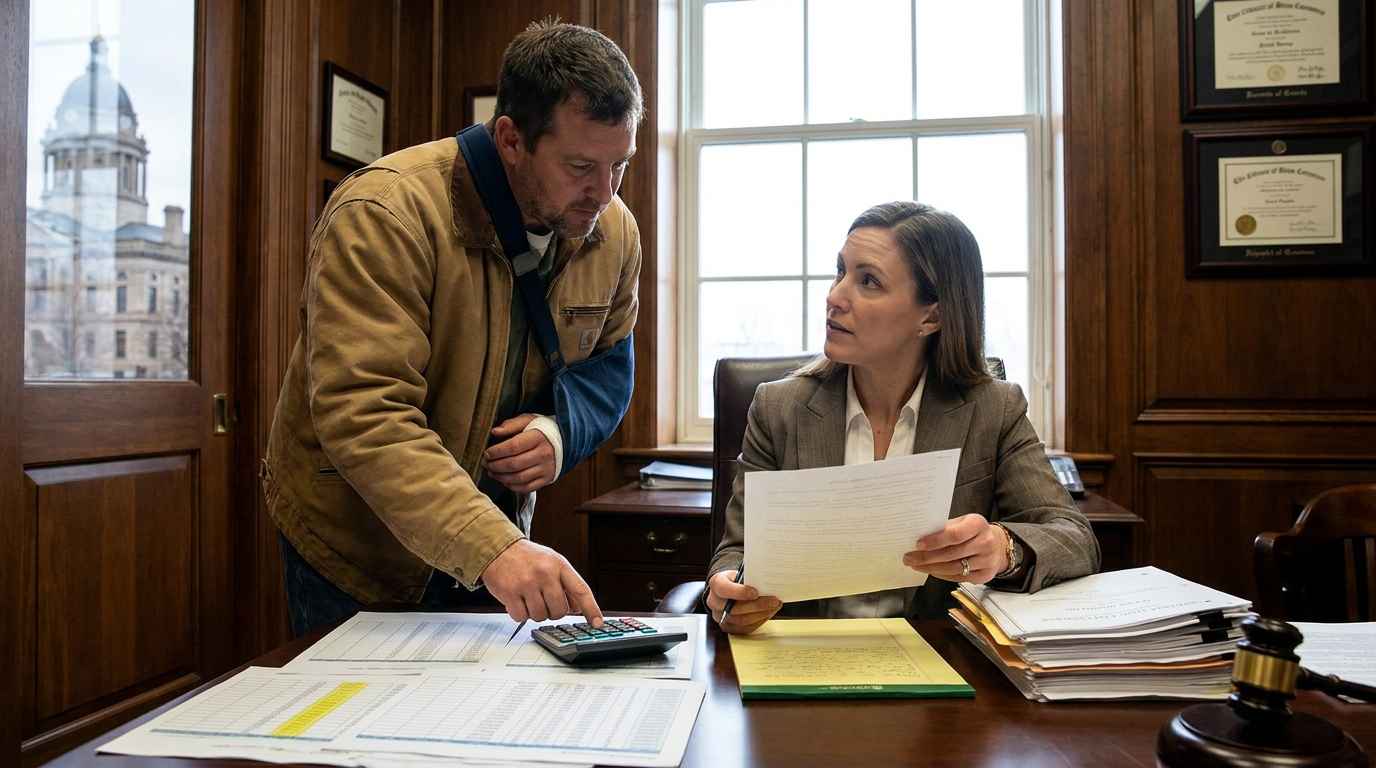
Employers reported approximately 2.6 million instances of injury or sickness that did not result in a fatality. Whenever an employee suffers an injury, particularly at the workplace, it usually results in time off work, which may mean loss of earnings. If the injury is severe enough, it might disqualify the individual from getting wages. This outcome results in the individual’s loss of earning capacity.
“Lost earning capacity” describes a situation in which a person’s capacity to earn an income is diminished. An injury that was another party’s fault normally causes this situation.
In personal injury cases, loss in earning capacity seeks to quantify future income that could have been earned by the victim if not for his or her current condition. One’s loss of wages becomes a result of physical disabilities, chronic pain, ill health or reduced employment income prospects.
How is lost earning capacity calculated in California and other states? The assessment of these damages by courts and insurers is addressed through the review of several aspects such as age, profession, level of education, working years, current pay, and future growth prospects. Courts will also evaluate how the injury affects an individual’s ability to work in the future.
Medical experts, vocational specialists, and economists have a role in assessing how an injury can affect the future earnings capacity of the person who sustains it.
Let’s examine how calculations of lost earning capacity are done in injury cases.
Lost Earning Capacity vs. Lost Wages: Why the Difference Matters
Economic damages consist of two distinct types of damages: lost wages and the loss of earning capacity. The term "lost wages" describes the income that you failed to receive during your recovery period after the accident since you were unable to work.
Lost earning capacity is a forward-looking claim. Your loss of income potential exists as a permanent reduction that spans your entire working life since your earning capacity before the injury exceeds your post-injury earning potential.
According to the law firm website https://www.barneslawgroup.com/, one has to establish that a duty of care was owed by the offender to the plaintiff if victims wish to have a valid personal injury lawsuit that asks for lost earning capacity damages. It must also be shown that the said duty was breached and the resulting breach caused harm.
When an employee is injured, they often come back to work part-time or for lesser wages. There are situations where an individual may be given a new position that won’t correspond well with their career, resulting in compensable losses.
Why the Vocational Expert Comes Before the Economist
The evidence sequence that expert witnesses present in court constitutes the primary structural element that establishes a lost earning capacity case. A forensic economist needs vocational rehabilitation expertise to establish your post-injury work abilities.
The vocational rehabilitation expert determines work capabilities, which the economist uses to build their assessment based on the expert's assessment results.
The vocational expert assesses your job skills before the injury, your educational background, your physical and cognitive abilities after the injury, and your current job market conditions to determine which jobs you can perform and how much you can earn.
Your work capacity will be reviewed through physician assessments. Your work history, interviews, and job requirement assessments will help show available job opportunities.
The forensic economist establishes their opinion based on the evidence collected. Your future work earnings will be calculated based on your remaining work-life expectancy. This amount will take into account future wage increases and benefits. Vocation experts will convert the total to present value through inflation adjustments.
Factors That Drive the Calculation
The size of a lost earning capacity claim depends on multiple factors that decide its magnitude. Each one requires detailed documentation.
You will be asked to provide proof of your salary before your injury and expected salary increases throughout your career. The calculation includes future promotional opportunities and bonus payments together with your expected career growth.
Age at the time of injury: Younger workers who sustain work-related injuries face extended work-life spans, which results in multiplied annual income losses throughout their future career duration. This outcome explains why the higher wage loss claims in lost earning capacity are usually those of young workers injured severely.
Occupation and skill transferability: A surgeon who loses fine motor control in their hands faces a different challenge than an accountant with a similar hand impairment. The forensic expert observes whether this occupation or those specific skills are suitable for similar paying employment.
Severity and duration of the impairment> These two elements play a key role in establishing the damages of the claim. Physician documentation of functional restrictions drives both the vocational analysis and the final damage figure.
Benefits and non-wage compensation: Employer-provided health insurance retirement contributions stock options and other benefits should all be treated as total compensation, which needs to be included when calculating base salary.
How Present Value Discounting Works
Future lost earnings cannot be evaluated through their nominal value since present money holds greater value than future money received after a decade. Forensic economists apply a present value discount rate to convert the stream of future losses into a lump sum that represents fair compensation today.
The U.S. Bureau of Labor Statistics provides wage and occupational data, which economists use to project growth in various fields while deriving the discount rate from low-risk investment return benchmarks.
Choosing that discount rate and the wage growth rate are often where opposing experts disagree most sharply. A difference of one percentage point in either figure applied over thirty years produces a significant difference in the final award.
Evidence That Supports a Lost Earning Capacity Claim
To create a valid lost earning capacity legal claim, you need to gather evidence from different sources before trial or settlement starts.
Medical records contain permanent restriction details together with functional limitation information and prognosis assessments from both treating physicians and independent medical examiners.
Employment and income records include W-2s, tax returns, pay stubs, and employer records. These documents demonstrate your complete earnings history and future career development.
The vocational rehabilitation evaluation requires a certified vocational rehabilitation counselor to assess post-injury employment options and realistic earnings through a written evaluation.
The forensic economic report includes a present-value calculation that determines the income gap throughout your remaining work-life expectancy.
The evidence of missed opportunities consists of documentation that shows the injury prevented the achievement of promotions, contracts, and career milestones.
What Determines Whether This Damage Is Recovered
Lost earning capacity is recoverable in serious injury cases, but it is not self-proving. Courts and insurers require evidence to establish a valid case. The quality of the evidence determines whether a settlement or verdict reflects the full economic impact of your injury.
The difference between a claim that captures this damage fully and one that falls short almost always comes down to the strength and sequencing of expert testimony. A well-supported vocational opinion gives the economist a foundation.
The personal injury attorney who specializes in serious injury cases takes charge of expert testimony from the start of the case instead of scheduling it for the trial's last moments.