Disclaimer: I'm a writer, not a doctor. This is for informational purposes. If you're sick, call your healthcare provider. Seriously.
The numbers: 11,458 cases. 495 hospitalizations. 2 deaths. 20 states. (CDC, Sept 3)
The culprit: Iceberg lettuce from Taylor Farms de Mexico. Recalled in July.
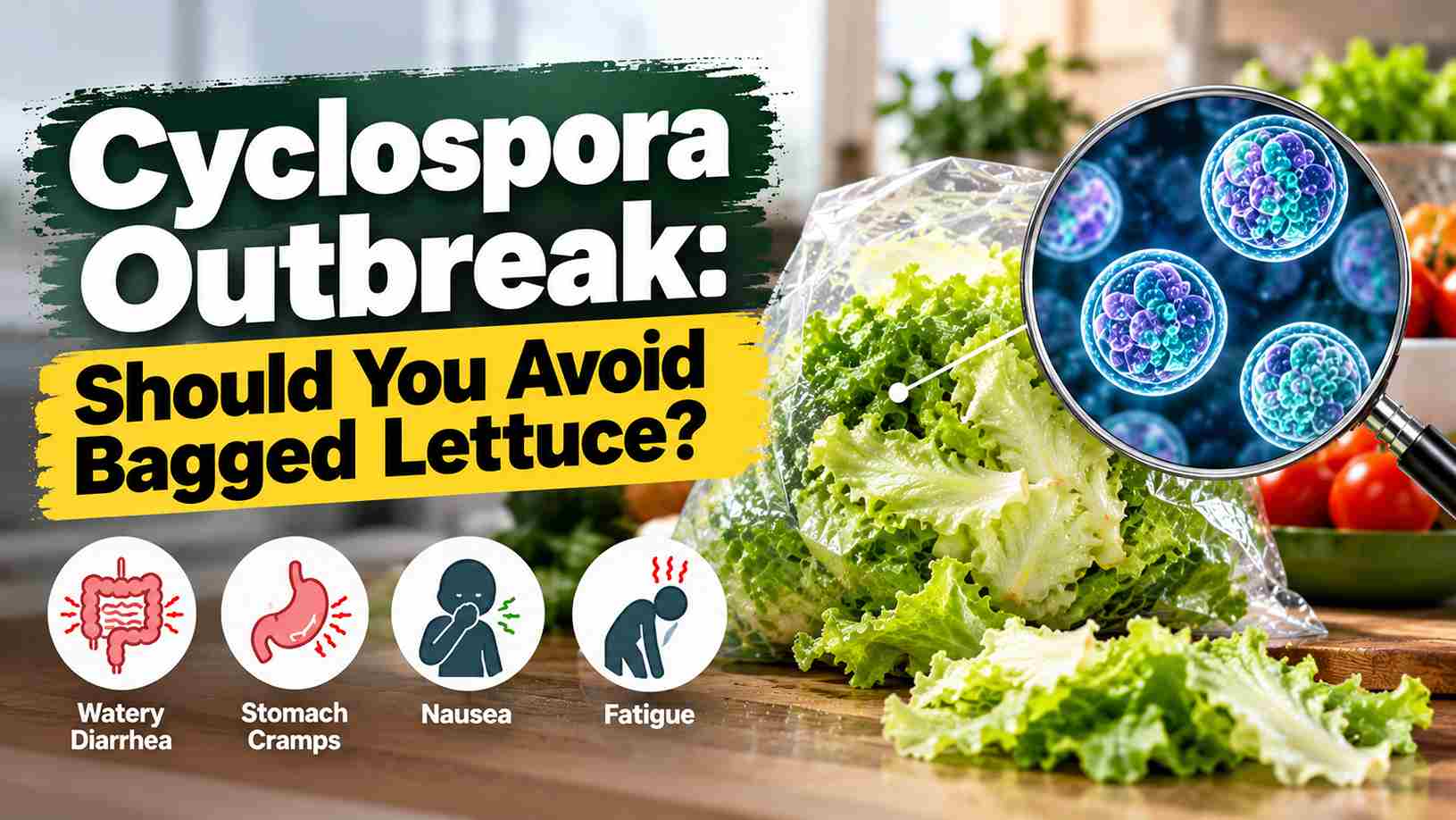
The symptoms: Watery diarrhea (like, really watery), stomach cramps, nausea, and fatigue that hits you like a truck.
If you've got diarrhea that won't quit, call your doctor and specifically ask for a Cyclospora test. Don't assume they'll check for it.
So... What's the Deal With This Outbreak?
As of September 3, 2026, the CDC has confirmed 11,458 cases of Cyclospora infection linked to contaminated iceberg lettuce. Yes, exactly from a vegetable. Almost 500 people ended up in the hospital. 2 people died.
The lettuce came from a single farm in central Mexico, supplied by Taylor Farms de Mexico. That was the good news: the actual reason was identified, and they were removed from the shelves by July 17.
The bad news is actually waiting, despite new cases slowing down, as the CDC admits the real number might be high, because most of the infected people were never actually diagnosed because they never went to the hospital to get a laboratory test, insted they treated themselves at home and got cured. That's why they never come in the official records.
So imagine this;
- 100 people actually get infected
- 40 go to the doctor and get tested
- 30 test positive and are recorded.
- The official record says 30 cases.
But,
Potentially 100 people actually got sick.
In reality, the national count was recorded as 15,0000 cyclospora cases confirmed regardless of the source of infection (lettuce or other contaminated foods), and most news channels were reporting this figure in mid-August.
11, 458 cases were grouped into this lettuce outbreak by the investigators. These numbers become different when we go deep into the details.
What Actually Is Cyclospora?
Cyclospora cayetanensis is a microscopic parasite that sets up camp in your intestines and causes an infection called cyclosporiasis.
How do you get it?
The fecal-oral route.
You eat or drink something that's been contaminated with poop. Gross, I know…
But that's the reality. According to Johns Hopkins, fresh produce that doesn't get cooked, like lettuce, basil, or raspberries, is the usual suspect. This time, it was iceberg lettuce.
One thing I want to make crystal clear: You cannot catch this from another person. Not from coughing. Not from sharing a fork. Not from hugging your sick roommate.
You can only get infected if you consume contaminated food or water.
So if you're worried about your kid bringing it home from school, relax. That's not how it works.
How Do You Know If You've Got It?
Symptoms usually show up about a week after you eat contaminated food. The CDC says it can take anywhere from 2 days to 2 weeks.
But here's the sign: it's watery diarrhea. Not just a little loose stool. I'm talking frequent, explosive, "I'm not leaving the house today" diarrhea.
Other things to watch for:
- You lose your appetite. Food just doesn't appeal.
- Weight loss follows, because you're not eating.
- Stomach cramps and bloating that make you feel like a balloon.
- Gas. Embarrassing, but yeah.
- Nausea. Sometimes you throw up; sometimes you just feel like you will.
Fatigue that hits different. Like, "I slept 10 hours and still need a nap" fatigue.
Low-grade fever? Maybe. But not always.
Here's the part that really stinks: Without treatment, symptoms can drag on for weeks. Or a month. Or longer. And just when you think you're better? Boom. It comes back. This parasite loves to play games. Relapsing is common. Fun, right?
How'd They Pinpoint the Lettuce?
This wasn't straightforward. Early cases popped up in Indiana, Kentucky, Michigan, Ohio, and West Virginia, many linked to Taco Bell. But health officials couldn't figure out which ingredient was the problem. Was it the cheese? The meat? The tomatoes?
Took a while, but the FDA eventually traced it back to iceberg lettuce from Taylor Farms de Mexico. The recall went out July 17.
But here's a hiccup: On July 18, the FDA announced a lettuce sample tested positive. Then, literally the next day, they walked it back. False positive. Testing for Cyclospora is tricky; it requires specialized techniques, and even then, it's not foolproof.
So yeah, they never found a confirmed contaminated sample. But the epidemiological evidence- who ate what, when, and where- was strong enough to connect the dots. Sometimes that's how investigations work. It's not always a smoking gun. Sometimes it's just... a lot of circumstantial evidence pointing in the same direction.
When Should You Call a Doctor?
Look, I'm not one to run to the doctor for every stomach rumble. But if you've got watery diarrhea multiple times a day, and it's been more than a couple of days? Make the call.
Here's the thing: Routine stool tests don't usually screen for Cyclospora. It's not on the standard panel. So when you call, be specific. Say, "I've been reading about the outbreak, and I'd like to be tested for Cyclospora." Don't assume your doctor will think of it on their own. They're busy. They see a hundred patients. You have to advocate for yourself.
- When to go to the ER, not just your primary care doc:
- You feel dizzy when you stand up. Like the room's spinning.
- Your heart's racing. You can feel it pounding.
- You're confused. Can't think straight.
- Your urine is dark. Or you're barely peeing at all.
You have a weakened immune system, HIV, chemo, transplant meds. The Cleveland Clinic says if that's you and you've got symptoms during an outbreak, go to the ER. Don't wait to see if it gets better.
How Do They Diagnose and Treat It?
Diagnosis requires a stool sample. But here's the catch: Cyclospora doesn't shed consistently. So they might need samples from multiple days to catch it. Annoying? Yes. Necessary? Also yes.
Treatment: The go-to antibiotic is trimethoprim-sulfamethoxazole (Bactrim). Works well for most people. If you're allergic to sulfa, don't panic; your doctor can prescribe ciprofloxacin or nitazoxanide instead.
Supportive care: Hydration is huge; oral electrolyte solutions like Pedialyte help. Severe cases might need IV fluids at the hospital. Once you start antibiotics, most people feel significantly better within 1 to 2 weeks. But don't be surprised if loose stools hang around for up to a month. Your gut's been through a lot.
How to Protect Yourself (Because This Won't Be the Last Outbreak)
The recalled lettuce is gone. Best-by dates have passed. But Cyclospora has a habit of showing up in different produce year after year. So here's what you can do:
Wash your hands and produce. Under running water. Not a quick rinse; actually scrub. And wash your cutting boards too.
Cook when you can. The parasite dies at 158°F (70°C). That's the only guarantee. Washing alone? Not enough.
Don't drink untreated water. Lakes, streams, well water- no. Not unless it's been boiled or treated.
Check recalls. Before you buy bagged salads, basil, cilantro, or berries, glance at the FDA or CDC recall list; it only takes a few seconds.
If you're high-risk, pregnant, elderly, or immunocompromised, skip raw produce during outbreaks. Not worth the risk.
Who's Most at Risk?
Anyone can get cyclosporiasis. But some people get hit harder:
Immunocompromised folks (HIV/AIDS, transplant recipients, etc.)
Older adults and young kids; their immune systems aren't as robust.
People with chronic GI conditions.
If that's you and you think you've been exposed, don't wait. Call your doctor early. The sooner you start treatment, the faster you recover.
One Last Thing
Look, I know reading about parasites and diarrhea isn't how you planned to spend your day. But outbreaks happen. They're part of the messy reality of our food system. But we know what caused this one. We know how to treat it. And we know how to protect ourselves going forward.
If you've got symptoms, don't ignore them. Don't assume it's just a stomach bug. Be proactive. Call your doctor. Ask for the right test. And if things get bad- dizzy, confused, dehydrated- get to the ER.
Stay safe. Wash your lettuce. And maybe cook your greens for a while. Just in case.
Frequently Asked Questions
1. Can I catch this from another person?
Nope. Only from contaminated food or water. You're safe from coughs, hugs, and shared meals.
2. How many people died?
The CDC confirmed 2 deaths as of September 3. Both had underlying health conditions.
3. Is the recalled lettuce still out there?
No. It's been recalled, and all the best-by dates are long gone. Still unsure? Check the FDA recall database.
4. Can I get Cyclospora more than once?
Yep. No lasting immunity. If you eat contaminated food again, you can get it again.
5. How long does it last without treatment?
Weeks. Sometimes a month or more. And it often relapses; just when you think you're clear, it comes back.